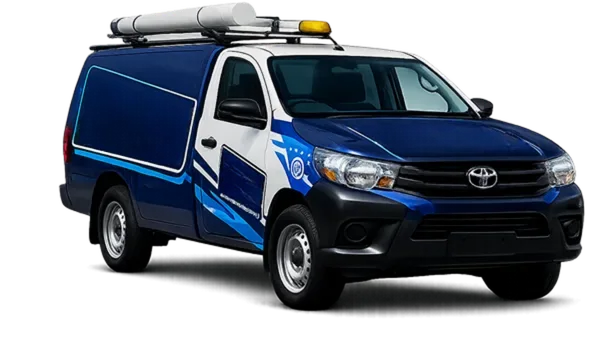
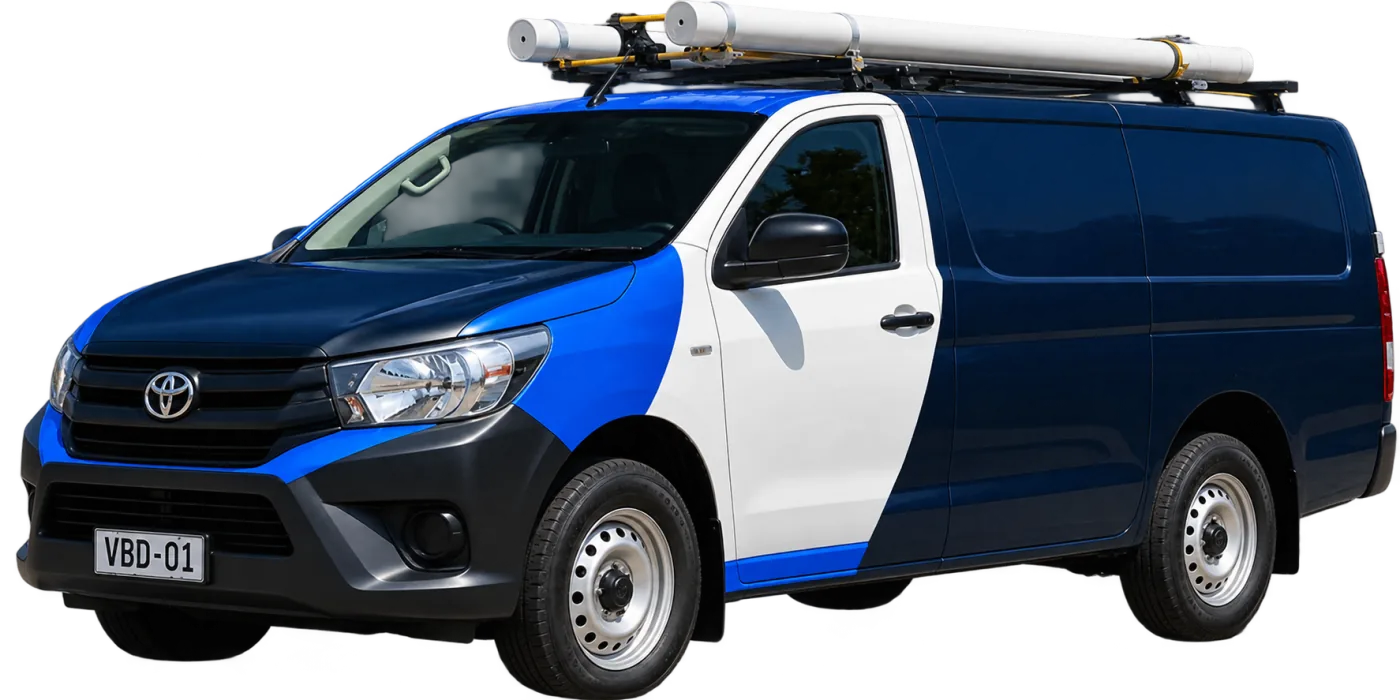
Repaired or replaced, with the right part on the van where we can. Telling us the make and model when you ring is what makes that possible at this distance.
Online Now!·--:--
The diagnosis is the same everywhere. Sydney's water is soft, so a storage tank is protected by a sacrificial anode that corrodes so the steel does not, and once it is spent the tank corrodes instead. That or a failed element is most of what we attend, and both are frequently repairs.
What is different across a region this long is the cost of getting it wrong. Arriving without the right part means a second trip, and a second trip out here is a genuine imposition on everybody.
The fix is almost embarrassingly simple. Find the compliance plate on the unit, usually a sticker or plate on the front or side, and read us the make, the model and the date. A photo is better still.
With that we can frequently arrive with the part already on the van, which turns two visits into one. Without it we are guessing, and guessing costs you a day.


A photo of it when you ring is worth more than any description, and it is frequently the difference between one visit and two.
Sydney's supply is soft. The anode protects the tank, and once it is gone the tank corrodes.
Replacing an anode costs a fraction of the tank and is the most worthwhile thing to do to a unit worth keeping.
It is on a plate or sticker on the unit, usually the front or the side.
Across this region that single piece of information is what lets us arrive with the part rather than the news that we need one.
The compliance plate carries the date. A young system with a failed component is worth repairing.
One deep into its life with a leaking tank is not, and we will say so.
It is the end of that unit, and the damage while somebody decides exceeds the replacement cost.
Isolate it and treat it as urgent.
Rusty or discoloured hot water, water at the base, banging or rumbling, and a relief valve discharging steadily.
None of those improve on their own, and out here catching them early avoids an emergency trip.
Type and capacity settle most changeovers. Out here there is one thing worth doing before any of it: reading the plate on the existing unit, so whoever quotes is quoting on fact rather than on a description over the phone.
| Type | Method of heating | Expected span | Reasonable where |
|---|---|---|---|
| Electric tank | A submerged element warms stored water, commonly overnight | About 8 to 12 years | Gas is absent and the existing recess suits a tank |
| Gas tank | A burner underneath maintains the stored volume | About 8 to 12 years | Gas is connected, with room for the tank and clearances |
| Continuous flow | Heated in transit, with nothing held back | About 15 to 20 years | Gas is connected and the tank's space is worth reclaiming |
| Heat pump | Ambient warmth transferred into the tank | About 10 to 15 years | Outdoor room with moving air, common on these blocks |
| Solar plus boost | Panels carry the load, a burner or element covers shortfalls | About 15 to 20 years | Roof orientation and space allow it |
An opening position rather than a prescription. What counts is how many people want hot water inside one hour, not how many live there.
| Occupants | Electric tank | Gas tank | Continuous flow |
|---|---|---|---|
| One or two | 125 to 160 L | 90 to 135 L | 16 L/min |
| Three to four | 250 to 315 L | 135 to 170 L | 20 L/min |
| Five upwards | 315 to 400 L | 170 L, or two units | 26 L/min |
| Weekend house, peaky use | Size to the peak | Size to the peak | 20 L/min |
Fixed price agreed before anything starts, with no distance loading. These are indicative 2026 ranges.
Credited against the repair if you go ahead.
The most common fault on electric storage, and a repair rather than a replacement.
The cheapest worthwhile thing you can do for a tank you intend to keep.
Supplied and installed, with removal and disposal included.
Where gas is available and the position suits.
Electric storage, gas where the street carries it, and continuous flow where a tank had to come off the ground and onto a wall. These are the makes behind all of it, and knowing which one you have is what gets the right part on the van.
We service and replace these systems as an independent licensed plumber. We are not an agent for, or endorsed by, any of these manufacturers.


Make, model and date. On this region that is what decides whether this takes one visit or two.

Loaded before we set out rather than ordered after we arrive.

If an anode, an element or a thermostat genuinely fixes it, that is the quote you get.

Old unit removed and taken away, the new one installed to standard and warranted in writing.
Ring with the make and model if you can reach them, and we will tell you honestly whether this is a one-visit job.
Call 1300 381 569
The make, the model and the date on the compliance plate, if you can get to them. On a region this long that is the difference between arriving with the right part and having to come back. It is usually on a sticker or plate on the front or side of the unit, and a photo of it is perfect.
On electric storage, look for a tripped circuit at the switchboard, which accounts for a surprising number of call-outs. On gas, check the pilot or ignition and that the supply is on. On anything, check whether an isolation valve got closed by somebody working on something else.
Very often. Sydney's water is soft, so the scale that finishes tanks in hard-water regions is not the story. Here the sacrificial anode corrodes away protecting the steel, and once it is spent the tank starts corroding instead. That or a failed element is most of what we attend.
No. A leaking storage tank is the end of that unit, and waiting to see whether it settles costs more in water damage than the replacement does. Isolate it and ring.
Frequently, if we know what we are coming to. That is the whole reason we ask for the make and model on the phone. Where a part has to be ordered we will say so before we leave rather than after we arrive.
It depends on type, installation and whether the anode was ever looked at, so we will not put a number on a unit we have not seen. We will find the compliance plate, tell you the age, and give a straight view on whether repairing it makes sense.
Diagnosis and report is $120 to $250, credited against the repair if you proceed. An element or thermostat is $250 to $550. An anode replaced is $300 to $600. A storage replacement is $1,400 to $2,800 installed, and the figure does not change with distance.
Tell us the suburb, and the make, model and date from the compliance plate if you can reach them. A photo is ideal.
Repair quoted before replacement, the right part where we can, and no distance loading on the price.
Online Now!·--:--